
The Calm Protocol
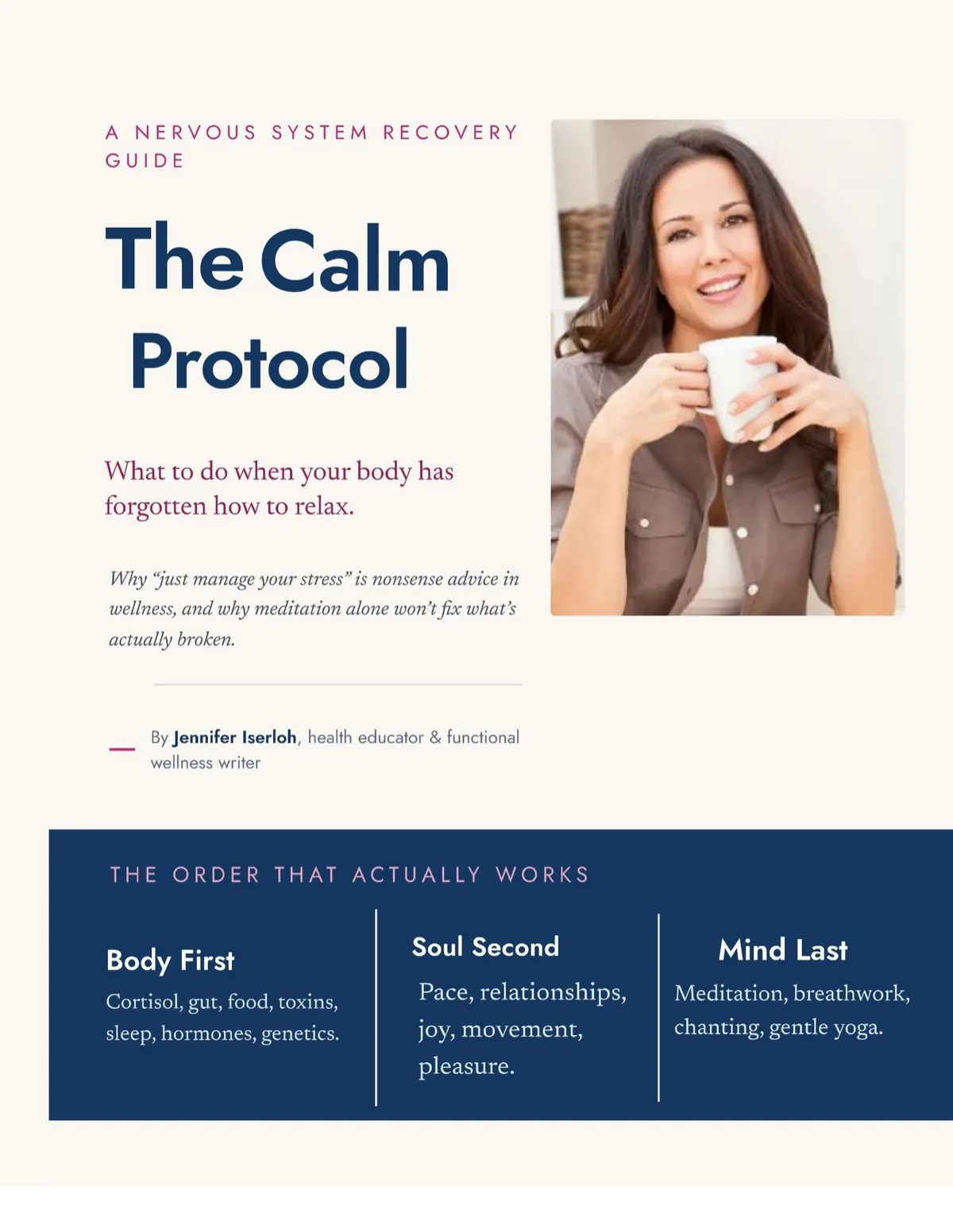
You're noticing your energy isn't the same.
Sleep is off for no obvious reason and your mood shifts in ways that don't match your life.
Weight won't budge the way it used to and your thinking feels a half-step behind.
Some days you feel like you're watching yourself from the outside. When you finally bring it up, you hear "your labs are normal" or "this is just aging" and you start to wonder if you're overreacting.
You're not! Standard blood tests were built to catch disease, not to reveal what's actually driving perimenopause symptoms.
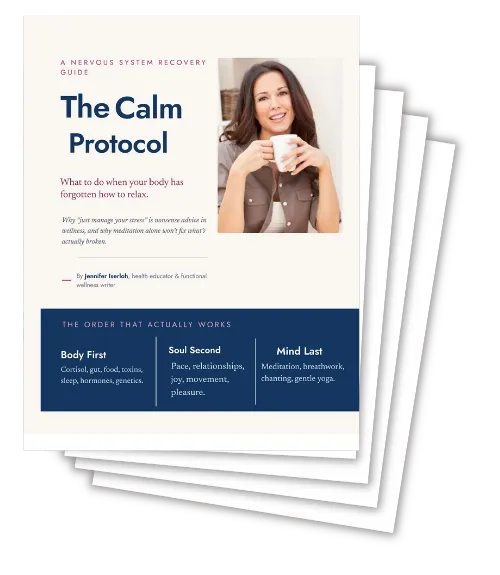
This free guide walks you through the biggest gaps in standard hormone testing and exactly which labs to request so you and your prescriber can build a plan around the full picture.
THE CLARITY YOU'VE BEEN LOOKING FOR, WITHOUT THE OVERWHELM.
This Essential Guide Will Show You…
WHY "your labs are normal" can be both true and misleading at the same time, along with what standard panels were never designed to catch
HOW perimenopausal hormone shifts actually show up, far beyond hot flashes – in sleep, mood, weight, energy, and mental clarity
HOW to partner with your existing doctor on testing and treatment decisions (no new prescriber required)
WHICH hormone markers matter most, and why saliva and blood spot testing reveal what serum panels often miss
WHAT a careful, personalized BHRT plan can do for your energy, sleep, mood, and clarity, plus how a compounding pharmacy works alongside the doctor who already knows you
Meet Jennifer Iserloh

For the past 20 years, Jennifer Iserloh has advocated for a healthier, holistic lifestyle based on healthy, delicious meals & mind-body practices from her years of studying yoga, Ayurveda and functional nutrition.
A classically trained chef and graduate of the Institute of Culinary Education, Jennifer is also a certified yoga teacher, a certified reiki practitioner, and a graduate of the Institute for Integrative Nutrition. She is the best-selling author of 50 Shades of Kale and The Healing Slow Cooker, among 22 other books.
Beyond TV appearances on The Today Show, ABC, NBC and FOX, she has also contributed thousands of articles, blog posts and recipes for print publications such as SELF, Yoga Journal, Health Monitor, Parents, Prevention, In Style, People, First For Women, AOL/Huffington Post and Livestrong.
In addition, she frequently collaborates with integrative & functional medicine practitioners on books and healthy eating programs, applying her deep expertise on nutrition and better balancing body, mind & soul.
How Long Have You Been Experiencing
Hormone-Related Symptoms?

Fatigue & Brain Fog

Stubborn Weight Gain

Dizziness & Vertigo
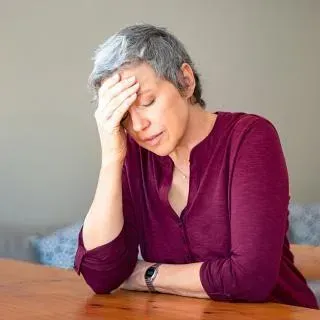
Stress & Anxiety Attacks

Sleep Issues

Itchiness, Dry Skin, Hair Loss

Joint & Muscle Pain

Digestive Issues
HERE'S WHAT "JUST MANAGE YOUR STRESS" LEAVES OUT…
3 Things That Change How You View Stress

The Full Picture
"Why Can't I Relax Even When Nothing Is Wrong?"
Stress is not only something you only feel in your mind. It is also a physical state shaped by your cortisol rhythm, your gut, your blood sugar, your sleep, and your hormones. When one of these is off, your nervous system can stay on alert long after the stressful moment has passed. You may not feel inflamed or out of balance, but your body reads it as a threat and keeps the alarm running. Addressing these drivers first is what makes calm possible.

The Right Insights
Why "Just Manage Your Stress" Isn't Helping
That advice puts the problem on your discipline and your mindset, and it skips what is happening underneath. Testing your cortisol pattern, gut health, food sensitivities, and hormones can show why your body won't settle. A practitioner trained in functional medicine and hormone health can help you read those results and build a plan around them, so you are working on the real drivers instead of trying harder to relax.

You Are Unique
"Why Do I React to Stress More Than Other People?"
Some bodies produce and clear stress chemicals differently. Genetic variants like MTHFR and COMT can affect how you make calming neurotransmitters and how quickly adrenaline leaves your system, which is why a hard conversation at 2 p.m. can still be with you at 8 p.m. Food sensitivities and hormone shifts add to that load in different ways for each person. What calms one person may do little for another.